Grief Lives In The Detail
I got on the bus out to Chatswood the other day, and on the radio I heard the date before anything else. It took a second longer than it should have for the actual significance of the date to arrive. September the eleventh. I had forgotten. It wasn’t that I hadn’t processed it, but I had forgotten in the sense that the single most documented, most photographed, most replayed event of my lifetime had quietly slipped out of the part of my mind where anniversaries live, and a bus radio had to hand it back to me.
I wanted to write something about this, because I'd seen the footage more times than I could count. Television replayed it until the footage became its own genre. I could describe images I'd absorbed a hundred times. And none of that, it turns out, is the same as fully understanding it.
When you read something in the printed word, like a newspaper, it does something different. It forces a specific pace on you, the pace your own mind moves at while processing language, not the pace some other system has decided will keep you engaged. There's nothing else in the frame. No autoplay, no next thing queued underneath the paragraph, nothing competing for the same three seconds your eyes are currently spending on a sentence. The article gives you context first, then detail, in the order a person decided would let the detail actually sit, because that's what writing does when nothing is rushing it along. You cannot skim your way into understanding what something cost. You have to be made to slow down first, and only the page has ever reliably done that.
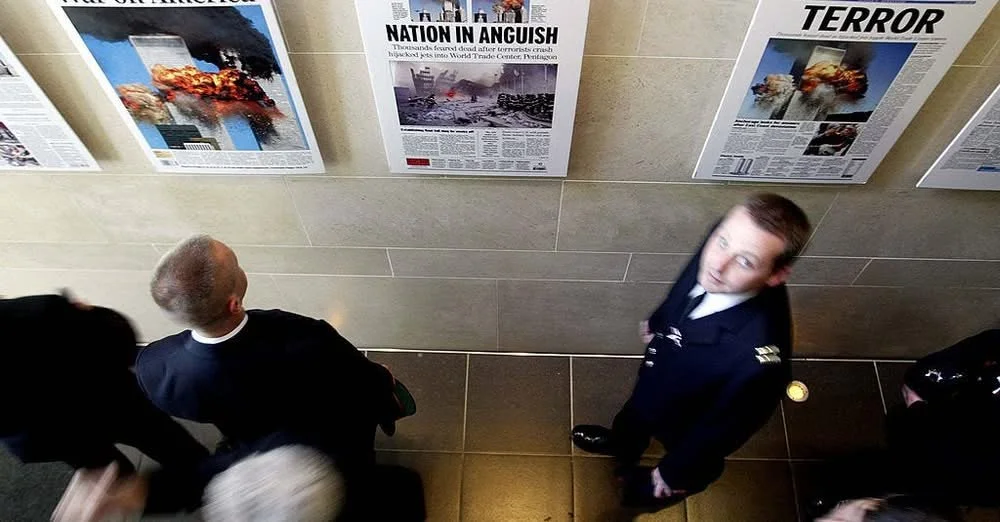
“You would be surprised, I think, by how much we understood about the terrorist attack by the time the papers went to print,” writes Nicholas Clairmont - Photo: Cathal McNaughton
A lot of events we hear about don’t arrive like that now. They arrive mid-scroll, one frame in a sequence that also contains a joke, an advert, someone's holiday, a fifteen-second clip of a show you don't watch. The image gets maybe two seconds before the next thing loads underneath it, already competing, already asking for something else. You see that something terrible has happened without ever being given the structural space to actually understand the true gravity of it. The feed was built to keep you moving, not to keep you still, and understanding really only ever happens when you're still.
So maybe it was never really about caring less. Maybe it's that footage and photographs and headlines can show you that something happened, but only the printed word, slow, forced, singular, nothing else on the page, has ever actually made anyone understand what it meant. Grief needs the detail, and the detail needs somewhere still to land. A feed was never built to hold either.
The bus kept moving. The radio moved on to traffic. I sat there doing the maths on how long it had actually been, and understood, properly, for the first time in a while, that the last thing I'd genuinely understood like that, I'd read.